
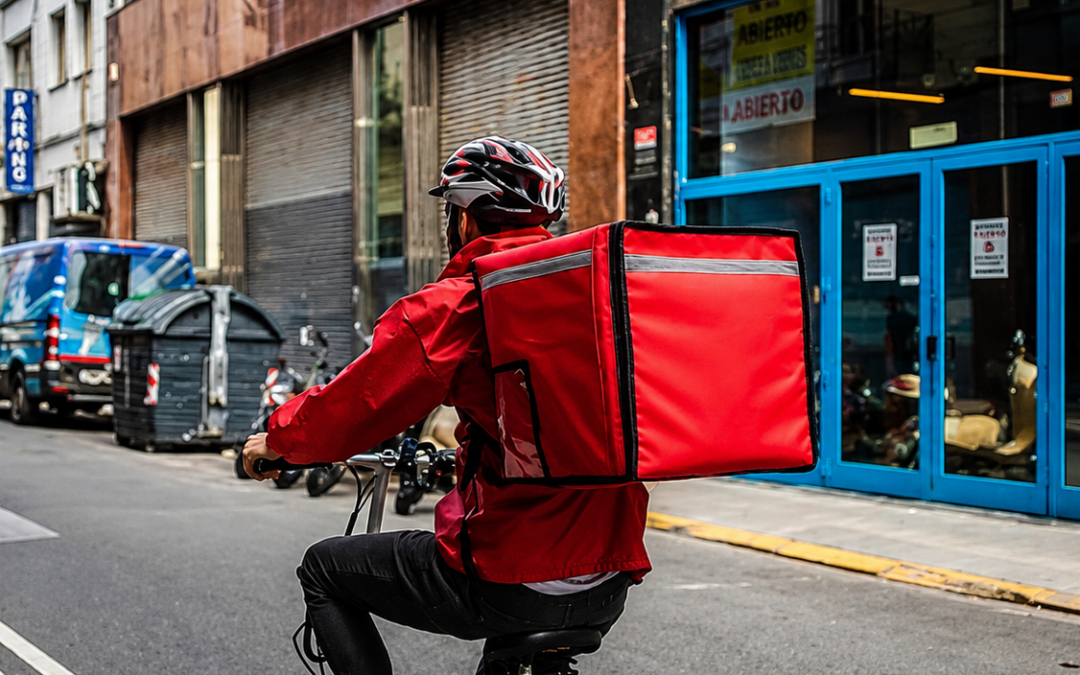
A delivery bag may look like a simple piece of equipment, but the wrong one can create expensive problems.
Cold food, crushed packaging, leaking containers, uncomfortable carrying and damaged zips all affect the final customer experience. For restaurants, takeaway businesses, caterers and couriers, the best delivery bag is not necessarily the biggest or most expensive. It is the bag that matches the food, packaging, delivery method and frequency of use.
Before buying, compare SpartanPac’s range of insulated delivery bags by size, format and carrying style.
What Features Should a Delivery Bag Have?
A good delivery bag should offer:
- Effective insulation
- The correct internal dimensions
- A stable and reinforced structure
- Strong handles, straps and closures
- An easy-to-clean lining
- Comfortable weight distribution
- Suitable weather protection
- Compartments or dividers where needed
These features work together. A well-insulated bag can still perform poorly if it is too large, closes badly or allows containers to move during transport.
1. Insulation and Temperature Retention
Insulation helps slow down temperature change during transport. It does not heat food or restore temperature once food has already cooled.
The performance of an insulated delivery bag depends on:
- The temperature of the food when it enters the bag
- The quality and thickness of the insulation
- How securely the bag closes
- The amount of empty space inside
- The outside temperature
- How often the bag is opened
- The length of the delivery journey
A bag with a loose flap or damaged zip can lose heat even when the walls are well insulated.
The terms thermal and insulated are also frequently used interchangeably. Buyers comparing product descriptions may benefit from understanding the difference between insulated and thermal delivery bags.
Insulation is only one part of the process. Packaging, loading time and delivery distance also affect how to keep food warm during delivery.
2. Choose the Right Size for Your Packaging
A larger bag is not automatically better.
Too much empty space allows containers to shift and can make temperature control less efficient. A bag that is too small can crush boxes, damage lids or make loading slower.
Before buying, measure:
- The width and length of your most common packaging
- The height of stacked containers
- The number of orders normally carried together
- The size of any pizza boxes, trays or drinks
- The available space on the bike, scooter or inside the vehicle
Allow enough room to load and remove orders without forcing them into the bag.
For pizza delivery, the base dimensions matter more than headline capacity. Pizza boxes should sit flat rather than being tilted or squeezed into a general-purpose bag.
3. Check the Structure and Stability
Soft, unstructured bags may be lightweight, but they can collapse around food packaging.
A structured delivery bag can help:
- Keep containers upright
- Prevent boxes from being crushed
- Reduce movement during transport
- Support stacked orders
- Make loading and unloading easier
Look for a reinforced base, stable side panels and strong corners. This is particularly important when carrying curries, soups, drinks or stacked takeaway containers.
Dividers can also help separate multiple customer orders, keep drinks upright and prevent heavier items from damaging lighter packaging.
Even the best delivery bag will perform badly if it is overloaded or packed incorrectly. Couriers should also understand how to pack a delivery bag correctly.
4. Inspect the Materials, Seams and Closures
Delivery bags are opened, carried, dropped, wiped and loaded repeatedly. Weak construction usually becomes obvious during busy shifts.
Check:
- Reinforced stitching around handles and straps
- Strong zip tracks and zip pulls
- Secure handle attachment points
- Durable outer material
- A wipe-clean internal lining
- Reinforced corners and base panels
- Closures that seal the bag properly
Do not judge durability from appearance alone. Two bags can look similar online but behave very differently after months of regular use.
The cheapest option can become expensive when handles tear, zips fail or the bag needs to be replaced frequently. Cost per use is a better measure than purchase price alone.
5. Consider Cleaning and Food Spills
Food delivery bags regularly come into contact with grease, condensation, sauces and spills.
A suitable bag should have an interior that can be reached and wiped without difficulty. Smooth internal surfaces, removable inserts and accessible corners can make cleaning faster.
After cleaning:
- Remove loose food and debris
- Wipe the lining using an appropriate method
- Clean around corners, seams and closures
- Allow the bag to dry fully before storing it
- Follow the manufacturer’s care instructions
A bag that is difficult to clean will create more work and may become unpleasant after repeated use.
Are Insulated Delivery Bags Worth It?
For businesses and couriers regularly transporting temperature-sensitive food, insulated delivery bags are generally worth the investment.
They can help:
- Slow heat loss
- Protect food presentation
- Reduce container movement
- Support a more professional handover
- Lower the risk of preventable quality complaints
However, insulation alone does not guarantee good results.
A poorly sized, overloaded or badly closed insulated bag can still lead to cold or damaged food. The bag must fit the order and the delivery process.
Common Delivery Bag Buying Mistakes
Avoid these common mistakes:
- Buying only on price
- Choosing a bag before measuring packaging
- Assuming one bag suits every food type
- Buying more capacity than needed
- Ignoring drink storage
- Carrying hot and cold food together
- Overlooking cleaning access
- Choosing comfort based on an empty bag
- Buying multiple bags before testing one with a normal order
For restaurants and courier fleets, testing a sample with real packaging is more reliable than judging a bag from photographs alone.
Delivery Bag Buying Checklist
Before buying, ask:
- Is the bag suitable for the food being delivered?
- Does the internal size match the packaging?
- Is the bag properly insulated?
- Does it close securely?
- Is the base stable?
- Can different orders be separated?
- Are the handles, seams and straps reinforced?
- Is the interior easy to clean?
- Is it comfortable when fully loaded?
- Does it suit the delivery vehicle?
- Is the weather protection suitable?
- Can it be tested before a larger order?
Delivery Bag Buying Checklist
There is no single best delivery bag for every courier or business.
The right choice depends on the type of food, packaging dimensions, delivery journey, transport method and frequency of use. A pizza shop may need a flat insulated bag, while a bike courier carrying mixed takeaway orders may need a structured backpack with dividers.
Browse SpartanPac’s range of delivery bags and pacs to compare sizes and formats.
Restaurants, takeaway groups and delivery operators can also explore delivery bags for businesses and courier fleets when planning larger orders.
6. Match the Bag to the Delivery Method
The best delivery bag also depends on how the order is transported.
Bicycle and scooter delivery
Bike and scooter couriers should prioritise:
- Secure mounting or comfortable shoulder straps
- Stable weight distribution
- Weather-resistant outer materials
- Reflective detailing
- A shape that does not shift while riding
- Enough structure to protect food from movement
Riders comparing bag formats can read more about choosing an insulated delivery bag for a bike.
A suitable bag must also be attached correctly. Poor mounting can affect both food stability and rider control, so follow a safe method to secure a delivery bag to your bike.
Car delivery
For car-based deliveries, focus on:
- A stable base
- Easy loading and unloading
- A shape that fits the available vehicle space
- Dividers for drinks and multiple orders
- Handles that are comfortable for short-distance carrying
7. Match the Bag to the Food
Different foods create different delivery problems.
| Food or order type | Suitable bag format | Features to prioritise |
|---|---|---|
| Pizza | Flat insulated pizza bag | Correct box width, flat support and secure closure |
| Takeaway meals | Structured insulated bag | Stable base, height and easy-clean lining |
| Burgers and boxed food | Backpack or carry bag | Structure, insulation and secure closure |
| Curries and sauced meals | Structured upright bag | Stability, dividers and spill-resistant lining |
| Drinks | Bag with drink support | Upright storage and movement control |
| Catering orders | Large reinforced bag | Strong handles, capacity and structural support |
| Mixed hot and cold food | Separate or divided bags | Effective temperature separation |
Pizza is particularly vulnerable to movement, rapid heat loss and trapped steam. This is why pizza needs a dedicated insulated delivery bag.
1. What features should a delivery bag have?
A delivery bag should have suitable insulation, a secure closure, durable construction, the correct dimensions, a stable base and an easy-to-clean lining. Carrying comfort, weather resistance and dividers will depend on how it is used.
2. Are insulated delivery bags worth it?
Yes, they are generally worthwhile for transporting temperature-sensitive food. However, performance also depends on packaging, bag size, closure quality, weather and delivery time.
3. What is the best delivery bag for hot food?
The best delivery bag for hot food is one that fits the packaging closely, closes securely and keeps containers stable. The ideal format will differ for pizza, stacked containers and catering trays.
4. How do I choose the right delivery bag size?
Measure the width, length and stacked height of your most common packaging. Also consider how many orders you normally carry and avoid choosing a bag with excessive unused space.
5. Can hot and cold food go in the same delivery bag?
Hot and cold products should ideally be separated using different bags or insulated compartments. Carrying them together can reduce temperature control for both.