

Food delivery is no longer a side feature of the restaurant industry. It is a primary revenue channel, operating at scale across gig economy platforms, dedicated courier companies, and restaurant-owned delivery fleets. Platforms like Uber Eats, Deliveroo, and Just Eat have transformed consumer expectations, creating a network of riders and drivers who complete millions of deliveries every day. At the centre of every successful delivery is a piece of equipment that is easy to overlook: the delivery bag. This guide covers everything operators, fleet managers, and individual riders need to know about choosing the right delivery bag for professional courier work.
Delivery Bags for Couriers: Quick Overview
If you need the key points fast, here is what professional courier operations should know:
| Key Takeaway | Detail |
|---|---|
| Temperature Retention | Professional insulated courier bags maintain food temperature across long delivery routes, protecting food quality and customer satisfaction. |
| Stacked Order Capacity | Larger commercial delivery bags allow couriers to carry stacked orders simultaneously, directly increasing delivery efficiency and earnings per hour. |
| Durability for Daily Use | Commercial delivery operations require bags built for repeated daily use across different weather conditions and vehicle types. |
| Brand Signalling | For restaurants and ghost kitchen fleets, branded courier bags represent professional presentation at the point of delivery. |
Delivery Is Now a Logistics Industry
It is worth stepping back to understand how dramatically the food delivery market has changed. What began as pizza delivery and Chinese takeaway has evolved into a sophisticated, multi-billion pound logistics network that rivals traditional freight in its operational complexity.
Today, the delivery ecosystem involves several distinct types of operations running simultaneously across every major city:

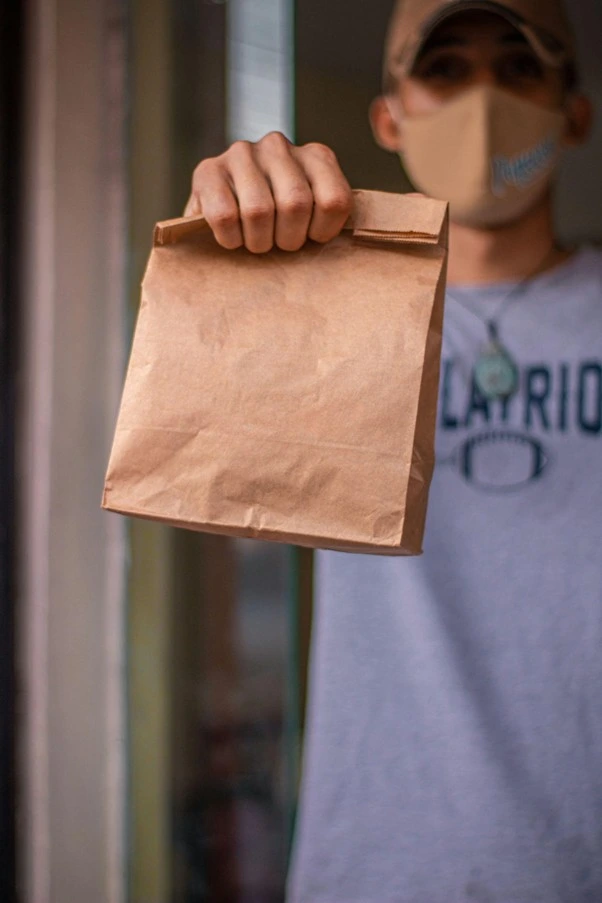
- Restaurants running their own dedicated delivery teams, often across multiple locations
- Courier companies managing fleets of riders on bikes, scooters, and cars
- Gig economy platforms like Uber Eats, Deliveroo, and Just Eat coordinating tens of thousands of independent riders
- Ghost kitchens and virtual restaurant brands that rely entirely on delivery for every order
- Independent couriers handling corporate meal delivery and office catering contracts
Each participant in this ecosystem depends on reliable, purpose-built equipment to function. Delivery bags are not accessories or optional upgrades. They are delivery infrastructure, as essential to consistent operations as the vehicle the rider uses or the software that dispatches the order.
Poor equipment creates a chain of operational failures: food arrives cold or damaged, customer ratings drop, riders lose earnings, and restaurants lose repeat business. Professional courier teams treat bag selection as an operational decision, not a retail purchase.
Why Professional Delivery Bags Matter for Food Delivery Businesses
For restaurants, ghost kitchens, and courier companies managing their own delivery operations, equipment standards directly affect business performance. Here is what commercial delivery bags bring to a professional operation.
Temperature Control Across the Full Route
Food temperature is a non-negotiable quality standard. Professional insulated courier bags use multi-layer thermal lining to maintain hot food temperatures throughout the delivery window, whether the route is five minutes or forty-five. For restaurants with delivery menus built around hot dishes, the bag is the final link in the quality chain. A courier bag that fails to retain heat is not a minor inconvenience; it is a direct reputational risk for the restaurant.
Stacked Orders and Delivery Efficiency
Commercial delivery bags are sized and structured to handle stacked orders, meaning a single rider can carry multiple orders from a single restaurant pickup, or orders from multiple restaurants on a combined route. Larger bag capacity directly improves per-hour delivery rates. For courier companies running managed fleets, equipping riders with appropriately sized bags is an operational efficiency decision with measurable impact on daily throughput.
Durability Under Daily Commercial Load
Consumer-grade grocery bags or cheap marketplace options are not built for commercial delivery volumes. Courier operations run six to seven days a week, across multiple shifts, in varying weather conditions. Zips, handles, straps, and thermal lining must withstand this repeated use. Professional courier bags designed for commercial delivery use reinforced construction and heavy-duty materials that hold up under real operational conditions.

Brand Reputation at the Door
For restaurants running their own delivery teams, the courier bag is the last brand touchpoint before the food reaches the customer. A battered, unbranded bag sends a very different message from a clean, professional insulated delivery bag. Restaurants and ghost kitchens increasingly invest in branded courier bags as part of a coherent customer experience strategy.
What Real Couriers Say About Delivery Bags
Platform delivery communities, including active Uber Eats driver forums, reveal a consistent pattern in how riders approach bag choices, particularly when starting out.
Many new riders begin with whatever is available: grocery insulated bags, cheap bags from online marketplaces, or the basic starter bags issued by the platform itself. Some riders in early-stage delivery work skip bags entirely, relying on their car seat warmer to maintain food temperature or placing orders in the back seat without insulation.
A common workaround reported by active couriers is the use of multiple small bags for stacked orders, which solves a capacity problem but creates inefficiency. Loading and unloading multiple bags at each pickup slows down the handoff process, which compounds across a full delivery shift.
Experienced couriers who move into higher-volume delivery work consistently upgrade to purpose-built bags. The reasons they cite align precisely with what commercial operations require: better insulation, larger capacity for multi-order pickups, and structural durability that consumer bags cannot provide. Riders who make this transition typically report both improved food quality on delivery and faster, more organised pickups.
The gap between a starter bag and a professional courier bag is not marginal. It is the difference between equipment that supports delivery as a secondary activity and equipment designed for delivery as a professional operation.
Types of Delivery Bags Used by Professional Couriers
Different delivery formats require different bag configurations. Professional courier operations typically use one or more of the following bag types depending on their vehicle type, order volume, and route structure.

Courier Backpack Delivery Bags
The courier backpack is the standard format for bike and scooter riders operating in urban environments. Worn on the back, the backpack keeps the rider’s hands free and maintains a low centre of gravity for safe cycling. Professional courier backpacks such as the Phoenix courier backpack are built with rigid internal frames to protect food structure during transport, reinforced shoulder straps for extended wear, and thermal lining capable of maintaining temperature across multi-stop routes.
For city couriers completing high volumes of deliveries on bikes, the backpack format is the most practical and operationally efficient option. It is also the format most visible to customers and bystanders, making professional design and branding particularly relevant.
Bike-Mounted Delivery Bags
Bike-mounted insulated delivery bags attach directly to the rear rack or front basket of a bicycle or cargo bike, removing all weight from the rider’s body. This format is particularly suited to couriers completing longer routes, carrying heavy orders, or operating cargo bikes with significant load capacity.
Professional insulated bike delivery bags include secure mounting systems to prevent movement during transit, weatherproof outer materials for all-condition operation, and thermal lining matched to the bag’s volume. For courier companies running bike fleets for restaurant delivery, mounted bags often enable higher order weights than backpack formats allow.
Large Insulated Food Delivery Bags
Commercial delivery bags in larger formats are designed for car-based delivery operations, restaurant pickup points, and high-volume stacked order handling. These are the bags that ghost kitchens, restaurant delivery fleets, and corporate catering operations rely on to move significant quantities of food across a delivery shift.
Large commercial delivery bags are typically loaded into the vehicle’s boot or rear seat and carried by handle to the customer’s door. The key specifications to evaluate are internal volume, thermal retention performance, structural rigidity to prevent food movement, and the durability of zips and handles under daily commercial use.
Cheap Delivery Bags vs Professional Courier Bags
The price difference between a basic delivery bag and a professional courier bag exists for operational reasons. Understanding what that difference reflects helps fleet managers and individual riders make the right investment.
| Factor | Cheap Bag | Professional Courier Bag |
|---|---|---|
| Thermal Insulation | Thin single-layer lining, rapid heat loss | Multi-layer commercial insulation, sustained temperature retention |
| Durability | Consumer-grade stitching and zips, fails under daily use | Reinforced construction, built for commercial delivery volumes |
| Capacity | Limited, unsuitable for stacked orders | Sized for multi-order pickups and commercial delivery requirements |
| Weather Resistance | Minimal, degrades in rain | Weatherproof outer materials for all-condition operation |
| Lifespan | Weeks to months under daily use | Designed for extended commercial operation |
| Cost Over Time | Frequent replacement inflates actual cost | Higher upfront cost, lower long-term cost per delivery |
For courier companies equipping multiple riders, the per-bag cost difference is easily offset by reduced replacement frequency and the operational benefit of consistent equipment across the fleet. Standardising on professional courier bags also simplifies equipment management, rider onboarding, and quality control.
Why Larger?
Earn More
Bag capacity is a direct earnings variable for couriers working on high-volume platforms. This is one of the most consistently overlooked aspects of courier equipment selection.
Stacked orders, where a courier collects multiple orders from a single restaurant or a cluster of nearby restaurants, are the most efficient delivery format available on platforms like Uber Eats and Deliveroo. A courier who can carry three orders simultaneously earns significantly more per hour than one who is limited to single-order deliveries by bag size.
The limiting factor for stacked orders is almost always bag capacity, not platform availability. When a platform offers a stacked order, a rider who cannot safely carry the additional order must decline it. Over a full shift, multiple declined stacked orders represent a measurable loss of earnings.
Professional courier bags sized for stacked orders also improve food safety during multi-order transport. A well-structured bag with defined internal compartments prevents orders from shifting against each other during transit, reducing the risk of spillage or packaging damage on combined deliveries.
For courier companies managing fleet operations, equipping all riders with appropriately sized bags is a straightforward operational improvement. Fleet managers who standardise on larger commercial delivery bags consistently report better stacked order acceptance rates and reduced order quality complaints.
Best Delivery Bags for Professional Couriers: SpartanPac
SpartanPac designs and supplies delivery bags built for professional courier operations. Our range covers the full spectrum of delivery formats, from urban bike couriers completing high-volume city routes to restaurant fleets managing daily delivery operations across multiple locations.
Every bag in the SpartanPac range is developed around the operational requirements of real delivery work. That means insulation rated for commercial delivery conditions, construction designed to withstand the demands of daily professional use, and sizing that supports stacked orders and efficient multi-stop route operations.
Our delivery bags are used by:
- Courier fleets operating at scale across cities and regions
- Restaurant delivery teams managing their own in-house operations
- Ghost kitchens and virtual brands relying entirely on delivery
- Individual Uber Eats, Deliveroo, and Just Eat riders upgrading to professional equipment
Whether you are equipping a fleet of fifty riders or upgrading your own kit for higher-volume delivery work, SpartanPac has the right bag for the job. Our equipment is not designed for occasional use. It is built for the daily demands of professional courier operations.
Shop Professional Delivery Bags at SpartanPac
1. How long does an insulated bag keep the food warm?Two to four hours on average. An insulated bag’s primary function is to maintain the stable temperature of its contents.
2. Where can I find quality safety gears and helmets for a bike delivery?SpartanPac offers a vast array of reliable helmets, safety gears, and accessories to couriers, delivering both comfort and peace of mind to improve their delivery operations. Check out our product’s page.
3. Are insulated food bags easy to clean?Insulated bags are often made from durable, easy-to-clean materials such as polyester or vinyl for ease of maintenance. You can simply wet and wipe them clean. Proper maintenance is essential to maximize your bag’s lifespan.
4. Where is the best place to purchase SpartanPac bags online?
Check out our website www.spartanpac.com or our Amazon and ebay shops