

The rise of robot delivery is sparking a big question: Are robots the future of the food delivery industry? Or will certain countries, like the UK and Japan, always prefer the human element?Robot deliveries are becoming more common, with major brands like Uber Eats, DoorDash, and Grubhub partnering with companies such as Starship Technologies, Serve Robotics, Mitsubishi, and Kiwibot, to deliver food on college campuses, apartment blocks, and in various cities.These robots have built-in sensors, cameras, and GPS, allowing them to navigate their surroundings, choose the most efficient routes, and avoid obstacles with little to no human oversight.
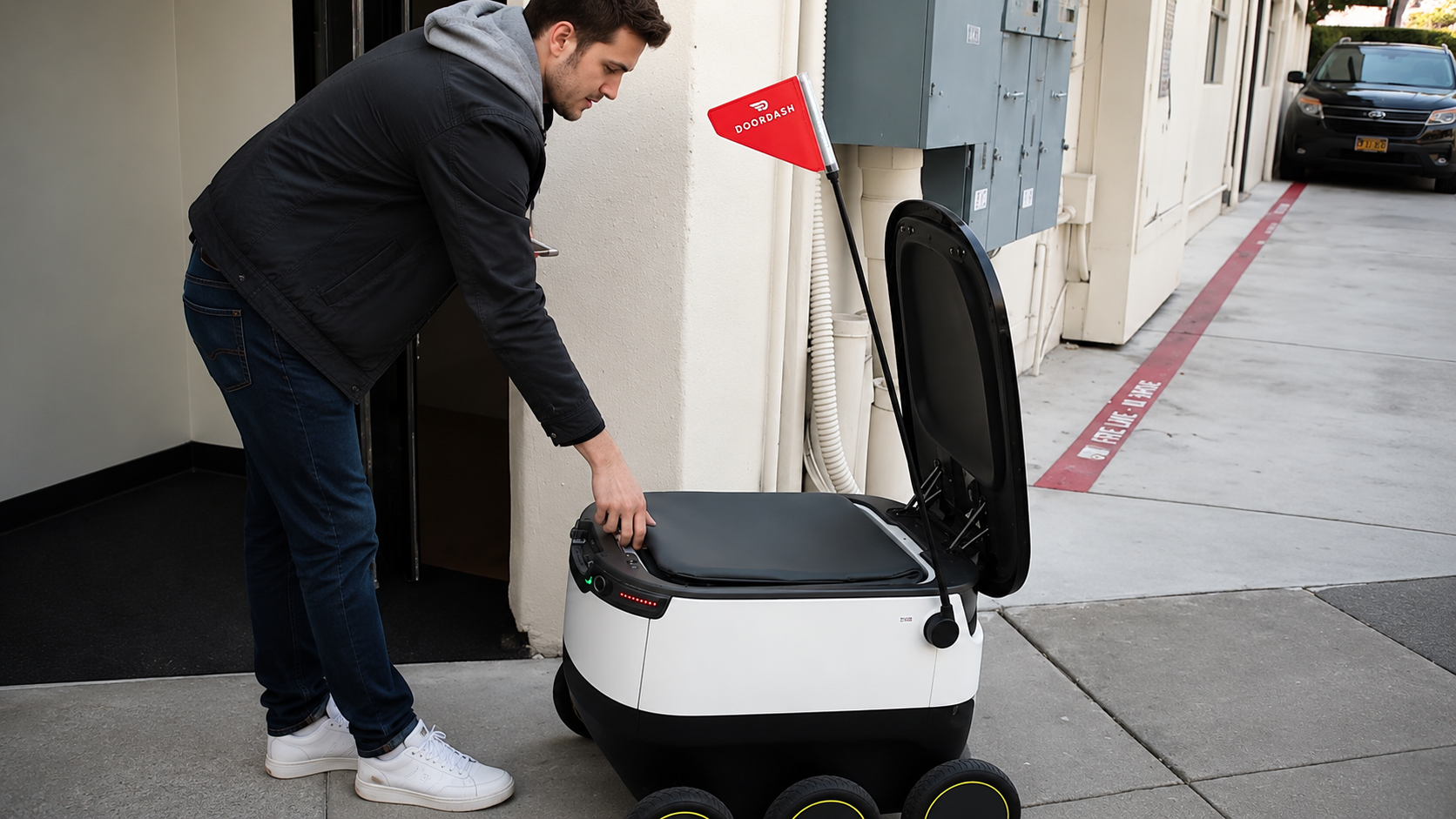
What about proper food insulation?
Of course, like our human delivery heroes, robot delivery services use insulated or thermal bags or compartments to keep food at the perfect temperature. A great example is Starship Technologies robots designed with specialised insulated sections that keep food hot, cold, or frozen as needed. This helps to ensure the quality, freshness, and safety of the food by maintaining the right temperature from pickup to delivery.
But how safe are robots from ‘theft’?
Often when it comes to robot delivery, we always think…what if someone steals the food? Well, these robots have built-in security features to prevent it. A locking mechanism keeps the container sealed until it reaches its destination. The recipient then scans a QR code to unlock it, or the robot’s GPS automatically unlocks the lid at the correct location. The checks and balances are in place specifically to ensure the food is delivered safely to the right person.
While the locking mechanism protects the food, it’s true that a determined thief could still steal the entire robot. However, the benefits of doing so are questionable. The devices are equipped with GPS trackers, making them easy to locate. Stealing one would likely be treated as seriously as breaking into a car.For now, robot delivery seems best suited for areas with low crime rates, where the risk of theft or vandalism is minimal.
Are robots the future of food delivery?
The future of food delivery will likely be a mix of robots and humans. While robots are becoming more popular, they aren’t always the best solution. For instance, a robot might get confused trying to navigate a multi-story apartment building, leading to a frustrated customer and the need to send a human to fix the error. So, even as technology advances, there will always be a need for human involvement.
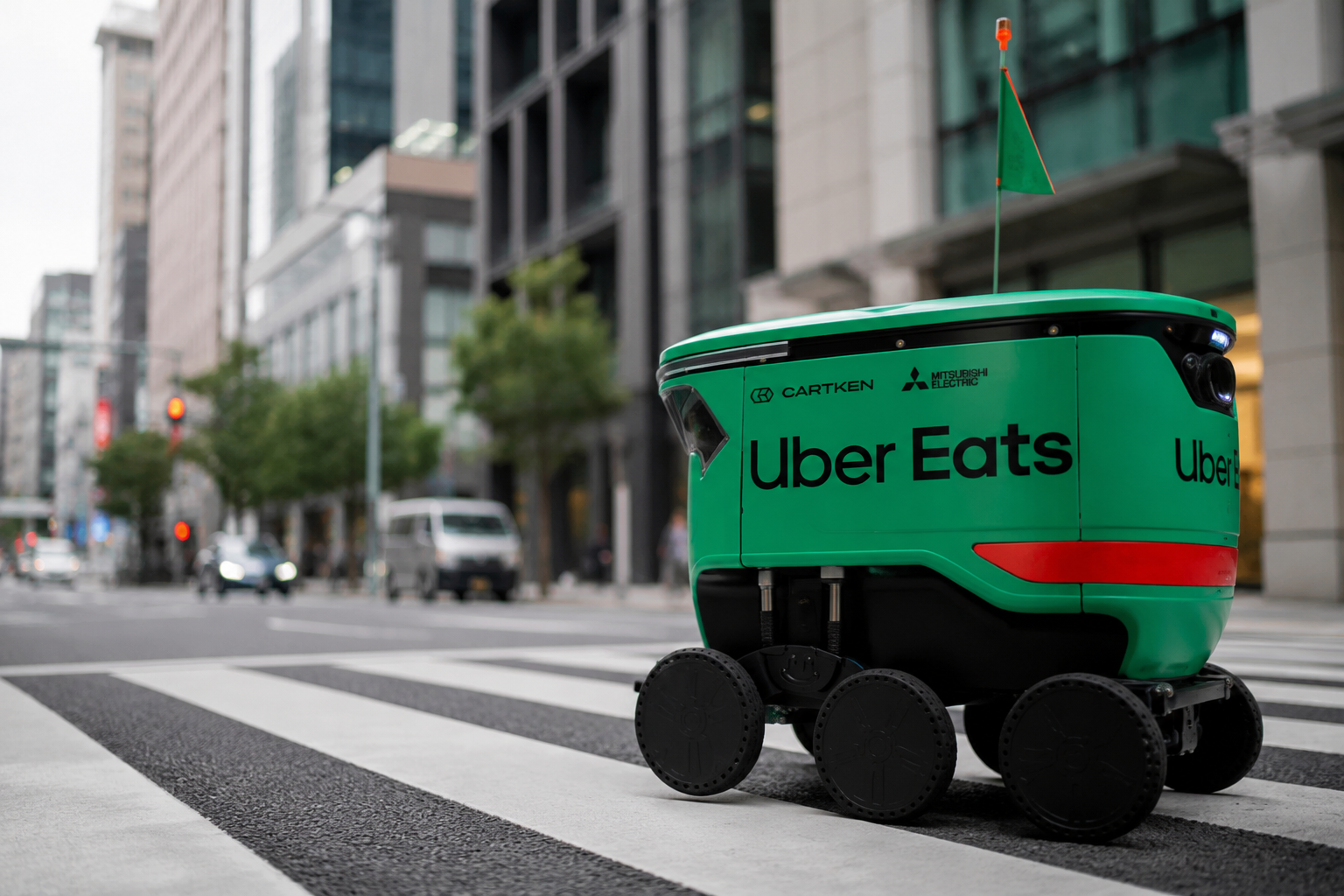
Great efficiency of Japan food delivery couriers
The Japanese food delivery market is massive, worth about $3 to $4 billion. Its huge size is largely due to the high population density. Even before COVID, food delivery was already popular in Japan, with Uber Eats being a dominant force. Now, it’s become second nature, and the market has expanded to include grocery and robot deliveries. For example, Mitsubishi and Uber Eats have been collaborating on robot deliveries for the past two years, showing significant and continuous growth.
Even with the intervention of robots it doesn’t mean human delivery couriers are already out of the picture. The pride Japanese people take in their work means the demand for human delivery couriers always remains strong. This suggests that a future with a 100% automated delivery system is unlikely, and a lack of human staffing for this work will probably not be an issue.
“Even in five or ten years time, there will always be work for the human delivery partners on the platform. Delivery partners are essential for us as we have many modes of delivery, right?” said Alvin Oo, Director, Market Operations | Uber Eats, Japan

The human element will always be unmatched in many ways…and they will always remain essential. Unlike robots, human couriers can navigate complex environments or buildings with intricate layouts. And only humans have the ability to handle delicate or unusual delivery instructions and provide a personal touch to the service.
“Some things can only be done by humans.” said the Director
People really value the human touch. They love getting their meal with a smile or having someone to talk to when there’s an issue with their order.
At the same time, robots are an undeniable part of our future. The combined efforts of humans and robots will make our work environments safer, more efficient, and better for everyone…as Uber Eats, Market Operations Director Alvin Oo said, “We see robots more as a complementary kind of service rather than something that’s going to replace or to change. It’s a supplement to our entire network.”
1. What food delivery services are utilising robot deliveries nowadays?Among the popular food delivery services using robots are Uber Eats, DoorDash, and Grubhub, partnering with companies such as Starship Technologies, Serve Robotics, and Kiwibot, to deliver food to customers in select countries.
2. Do robots use insulated or thermal bags or compartments for their contents?Yes, robots do use insulated or thermal bags or compartments to keep food at the perfect temperature.
3. Where can I find high quality insulated or thermal bags for food delivery couriers?SpartanPac offers a wide selection of high quality insulated or thermal bags along with reliable helmets, protective gears, and accessories for delivery couriers.