

These factors determine whether the best option is a softshell, lightweight waterproof shell, insulated jacket or layered clothing system.
Businesses planning a coordinated uniform range can explore SpartanPac’s branded workwear and uniforms for jackets, workwear and other custom team clothing.
Start With the Working Conditions, Not the Jacket Style
The first mistake buyers make is choosing a jacket based primarily on appearance.
The first mistake buyers make is choosing a jacket based primarily on appearance.
A delivery rider cycling through frequent rain has different requirements from a warehouse employee occasionally working in a loading area. A mobile maintenance team may need freedom of movement and tool access, while event staff may prioritise visibility and a consistent public-facing appearance.
Before comparing jacket options, identify:
- Whether the team works in light rain or prolonged heavy rain
- The average temperature and wind exposure
- How physically active employees are during a shift
- Whether the jacket will be worn over other layers
- Whether employees need reflective detailing
- How often the jacket will be washed
- Which tools, devices or equipment must remain accessible
- Whether the team works around vehicles, roads or machinery
Which Materials Are Best for Outdoor Workwear?
Not every jacket marketed for outdoor use is waterproof.
Some fabrics are only water-resistant. They may repel light rain for a limited period but allow water through during prolonged exposure. Buyers should therefore assess the complete jacket construction rather than relying on a general product description.
Waterproof Shell Fabrics
Waterproof shells commonly use woven polyester or nylon combined with a waterproof membrane or coating.
These jackets are usually the strongest option for teams exposed to sustained rain. Their performance also depends on:
- Taped or sealed seams
- Water-resistant or covered zips
- Adjustable cuffs
- A properly constructed hood
- Storm flaps
- The quality of the waterproof membrane or coating
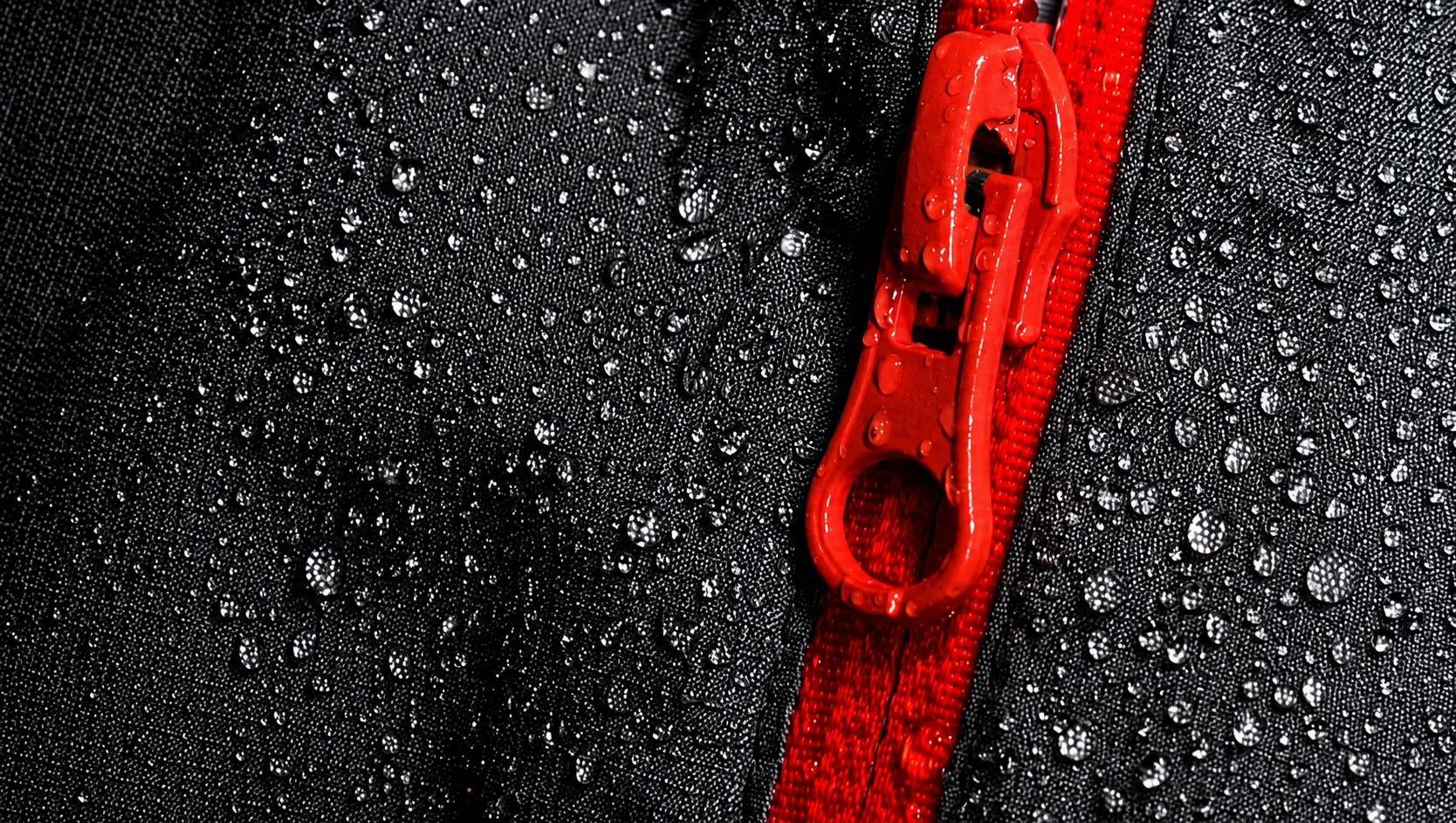
A waterproof fabric alone does not guarantee a waterproof jacket. Water can still enter through untreated seams, zip openings and poorly designed cuffs.

Coated Polyester
Coated polyester can provide practical rain protection at a more accessible price point.
It may suit larger team rollouts where employees face occasional or moderate rain. However, lower-quality coatings can become less effective after abrasion, repeated folding or frequent washing.
Businesses should request samples and test the finished jacket rather than judging performance from fabric specifications alone.
Nylon
Nylon is often lightweight, flexible and abrasion-resistant. It can be used in waterproof shells, packable jackets and technical outdoor clothing.
Its actual weather performance depends on the coating, membrane and seam construction applied to the finished garment.
Softshell Fabric
Softshell jackets usually combine woven synthetic outer fabrics with a flexible inner layer.
They are commonly wind-resistant, breathable and capable of handling light rain. Most standard softshell jackets are not designed for prolonged exposure to heavy rainfall.
Softshell Fabric
Softshell jackets usually combine woven synthetic outer fabrics with a flexible inner layer.
They are commonly wind-resistant, breathable and capable of handling light rain. Most standard softshell jackets are not designed for prolonged exposure to heavy rainfall.
Fleece and Cotton Layers
Fleece can provide warmth but is not waterproof. Cotton-based jackets can absorb moisture and become heavy when wet.
These materials may be useful as mid-layers, but they should not be relied on as the main protective outer layer in persistent rain.
Insulated Waterproof Materials
For teams operating in cold and wet conditions, an insulated waterproof jacket may combine:
- A waterproof outer shell
- Synthetic insulation
- A breathable lining
- Sealed seams
- Adjustable weather protection features
This construction offers greater protection but can become too warm or bulky for highly active teams.
Water-Resistant and Waterproof Are Not the Same
The distinction matters when buying jackets for working teams.
A water-resistant jacket may be suitable for:
- Short periods outdoors
- Light showers
- Commuting
- Low-risk weather exposure
- Staff moving between buildings and vehicles
A waterproof jacket is more appropriate for:
- Delivery teams working through rain
- Field service employees
- Event crews
- Construction and maintenance teams
- Utility workers
- Teams unable to immediately seek shelter
Do not pay for a technical waterproof jacket where light weather resistance would be sufficient. Equally, do not reduce costs by issuing water-resistant jackets to employees who will spend several hours in heavy rain.
The cheapest jacket is not the lowest-cost option when it fails early or employees refuse to wear it.
Are Softshell Jackets Suitable for Outdoor Teams?
Softshell jackets are suitable for many outdoor teams, but they are not the right answer for every environment.
Their main advantage is balance.
A well-designed softshell can provide:
- Freedom of movement
- Wind resistance
- Breathability
- Light rain protection
- Moderate warmth
- A smooth surface for branding
- A professional fitted appearance
This makes custom softshell jackets particularly useful for active teams that move between indoor and outdoor environments.
Examples include:
- Delivery and logistics supervisors
- Field sales teams
- Mobile technicians
- Event crews
- Warehouse employees
- Facilities teams
- Drivers
- Hospitality staff working around outdoor areas
However, softshell jackets become a weak choice when employees face prolonged heavy rain. In those conditions, a waterproof outer shell or layered jacket system is more reliable.
Consider a Layered System
One jacket does not need to solve every weather condition.
A practical uniform system might include:
- A branded base layer or polo shirt
- A fleece or softshell for warmth and movement
- A lightweight waterproof shell for heavy rain
This gives employees more control over temperature and weather protection.
It may cost more initially than issuing one basic jacket, but it can improve year-round usability and reduce complaints about overheating or inadequate protection.
For broader guidance on clothing for active delivery roles, read how food delivery couriers should dress.
How Should Branded Jackets Fit?
A branded work jacket should allow employees to move safely while maintaining a professional appearance.
The ideal fit is neither excessively tight nor unnecessarily oversized.
A jacket that is too tight can:
- Restrict shoulder and arm movement
- Compress insulating layers
- Make sitting or driving uncomfortable
- Pull around the logo area
- Prevent employees from adding layers underneath
A jacket that is too loose can:
- Catch on equipment
- Allow cold air or rain inside
- Obstruct access to tools
- Reduce visibility of reflective details
- Look inconsistent across the team
Avoid Relying on One Unisex Fit
One unisex cut rarely fits an entire workforce well. Where order volume allows, consider:
- Men’s and women’s fits
- Extended size ranges
- Adjustable hems
- Adjustable cuffs
- Different jacket lengths
- Stretch panels
- Multiple sample sizes
Poorly fitting uniforms often remain in lockers, vehicles or storage rooms. That is an operational failure, not merely a style issue.
Use a Sizing Sample Set
For larger orders, create a sizing process before confirming final quantities. A sensible process includes:
- Supplying sample jackets in a range of sizes
- Allowing employees to try them on over normal work clothing
- Recording confirmed sizes
- Reviewing the overall size distribution
- Ordering a small number of replacement sizes
- Keeping future starters and staff turnover in mind
Do not estimate an entire team’s sizes from a generic spreadsheet if employees can realistically test samples.
Weather Protection Features Worth Considering
Fabric is only one part of jacket performance. The following features can significantly affect comfort and protection.
Sealed Seams
Needle holes created during garment construction can allow water through. Waterproof jackets intended for sustained rain should use taped or sealed seams in critical areas.
Adjustable Cuffs
Adjustable cuffs can limit rain and wind entering through the sleeves. They should also work comfortably with gloves.
Hood Design
A useful work hood should:
- Provide adequate coverage
- Adjust without blocking vision
- Remain secure in wind
- Work with required head protection
- Allow the wearer to turn safely
A large hood may look protective but become dangerous if it restricts peripheral vision.
Zip Protection
Exposed zips are common water entry points. Water-resistant zips, storm flaps and internal guards can improve protection.
Breathability
Highly active employees generate heat and moisture inside their clothing. A jacket can keep rain out while still leaving the wearer wet from perspiration. Breathable fabrics, ventilation points and appropriate insulation help manage this problem.
Insulation
More insulation is not automatically better. A heavily insulated jacket may be appropriate for stationary employees but uncomfortable for riders, couriers or technicians performing physical work. Match insulation to activity levels as well as temperature.
Reflective Detailing
Teams working near traffic, vehicles or low-light environments may benefit from reflective panels, piping or logo transfers. Reflective decoration should support visibility without replacing any legally required high-visibility or protective clothing.
Pockets and Access
Consider what employees carry during a shift:
- Mobile phones
- Radios
- Keys
- Identification cards
- Scanners
- Documents
- Gloves
- Small tools
Pocket placement should remain accessible when the employee is sitting, driving, cycling or wearing other equipment. Teams facing demanding outdoor environments may also benefit from SpartanPac’s guidance on delivering in extreme conditions.
What Branding Methods Are Available for Work Jackets?
The best branding method depends on the jacket material, logo complexity, order quantity and working environment. A method that works well on a cotton sweatshirt may not be appropriate for a waterproof shell.
Embroidery
Embroidery creates a durable and professional finish. It is often suitable for:
- Softshell jackets
- Fleece jackets
- Heavier woven fabrics
- Premium corporate workwear
- Small chest logos
Advantages include:
- Strong durability
- Premium appearance
- Good colour consistency
- Resistance to repeated washing
However, embroidery adds needle holes to the fabric. On waterproof jackets, this can affect water protection unless the area is properly backed or sealed. Large embroidered logos can also make lightweight fabrics stiff or distorted.
Screen Printing
Screen printing applies ink directly to the garment. It can be effective for:
- Larger order quantities
- Simple logos
- Bold colours
- Large back designs
- Flat fabric areas
The result depends heavily on the ink, fabric coating and curing process. A supplier should test adhesion before approving production.
Heat Transfer
Heat transfer branding is widely used for detailed logos, individual names and multicolour designs. It can suit:
- Waterproof shells
- Softshell jackets
- Small production runs
- Reflective branding
- Employee names
- Complex logos
The transfer material and application temperature must be compatible with the jacket fabric. Excessive heat can damage coatings or distort technical materials.
Woven Patches
Woven patches can reproduce detailed logos and provide a consistent premium appearance. They can be sewn or bonded onto the garment. Sewn patches may affect waterproofing, while bonded patches require careful material testing.
Rubber or Silicone Badges
Rubber badges create a modern, dimensional finish. They are suitable for brands seeking a technical or premium appearance but may add cost, weight and stiffness.
Sublimation Printing
Sublimation allows full-colour designs to become part of polyester fabric. It is most useful when the jacket or selected panels are being custom manufactured. It is not normally applied to a finished dark-coloured jacket in the same way as embroidery or heat transfer.
Reflective Logo Transfers
Reflective transfers can combine branding with improved visibility in low-light conditions. They are particularly relevant for delivery, transport and roadside teams. Placement should be tested while employees are wearing bags, harnesses or other equipment that could cover the logo.
Branding Placement Should Follow Function
The largest possible logo is not always the best branding decision. Logo placement should consider:
- Harnesses and backpack straps
- High-visibility panels
- Pocket openings
- Seams
- Ventilation areas
- Waterproof construction
- Employee movement
- Whether the jacket is normally worn open or closed
A chest logo may remain visible when an employee is facing a customer. A back logo may provide stronger distance visibility but could be covered by a delivery backpack. Sleeve branding can work well for side visibility, although the design must tolerate repeated bending and abrasion. For delivery teams using branded bags or equipment, jacket branding should be planned as part of the overall uniform rather than as an isolated item. SpartanPac’s article on how branded gear supports food delivery businesses explains how coordinated equipment can reinforce brand recognition.
Off-the-Shelf Jackets or Fully Custom Development?
There are two main ways to procure branded jackets.
Off-the-Shelf Jacket With Added Branding
This approach uses an existing jacket style and applies a logo through embroidery, transfer or printing. It is usually best when businesses need:
- Lower quantities
- Faster production
- A proven garment
- Straightforward branding
- Standard colour options
- Easier replacement orders
The trade-off is limited control over materials, features, colours, fit and construction.
Fully Custom Jacket Development
A fully custom jacket can be developed around specific operational and branding requirements. Businesses may be able to define:
- Outer fabric
- Waterproof construction
- Insulation level
- Lining
- Colour combinations
- Pocket configuration
- Reflective panels
- Hood design
- Zip style
- Logo placement
- Labels and packaging
- Men’s and women’s cuts
- Size range
This approach provides greater control but typically requires larger order quantities, more development work and longer lead times. Sampling is essential. A digital mock-up cannot prove that a jacket fits correctly, remains waterproof or withstands repeated use. Businesses that need something beyond a standard decorated garment can use SpartanPac’s custom product development support to develop jackets around their operational requirements.
What to Test Before Approving Production
A pre-production sample should be treated as a working prototype, not a presentation item. The approval process should assess:
Fit
Test the sample on people with different body types and sizes. Evaluate it over normal work layers.
Movement
Ask employees to perform real working movements rather than simply trying the jacket on.
Water Protection
Inspect seams, zip areas, cuffs, pockets and the hood. Where waterproofing is critical, request appropriate technical testing from the supplier.
Branding
Check:
- Logo dimensions
- Colour accuracy
- Position
- Visibility
- Fabric distortion
- Adhesion
- Stitch quality
- Interaction with waterproof layers
Washing and Care
Wash the sample according to the proposed care instructions. Check for shrinkage, colour changes, transfer lifting, thread damage and coating deterioration.
Equipment Compatibility
Test the jacket with backpacks, harnesses, radios, helmets, gloves and other equipment employees use.
Employee Feedback
Operational employees will identify problems that office-based buyers miss. Their feedback may reveal restricted movement, poor pocket placement, excessive heat, hood visibility problems or inaccessible zips. Ignoring wearer feedback is one of the fastest ways to produce a uniform employees avoid.
Common Mistakes When Ordering Custom Branded Jackets
Treating Water-Resistant as Waterproof
These terms are not interchangeable. Specify the actual exposure conditions and ask how the complete garment is constructed.
Prioritising Appearance Over Work
A fitted jacket may look sharp but fail when employees bend, lift or add winter layers.
Selecting One Jacket for Every Role
Different roles may require different levels of insulation, mobility and weather protection. A coordinated jacket range can still maintain consistent branding without forcing every employee into the same garment.
Using One Unisex Size Curve
This often produces poor fit at both ends of the size range. Gather real sizing information.
Choosing Branding Before the Jacket
The garment material and construction should determine which branding methods are suitable.
Approving Only a Digital Visual
A visual mock-up cannot demonstrate fit, waterproofing, comfort or durability.
Ordering Without Replacement Stock
Employees join, leave, lose items and change sizes. Plan how replacement jackets will be supplied after the first order.
Ignoring Lead Times
Custom fabrics, colour matching, samples and production approvals take time. Starting development shortly before winter or a major launch increases the risk of rushed decisions and late delivery.
A Practical Jacket Specification Checklist
Before requesting a quotation, provide the supplier with:
- Intended job roles
- Country and climate
- Typical weather exposure
- Required level of waterproofing
- Temperature range
- Employee activity level
- Insulation requirements
- Preferred jacket type
- Required colours
- Brand guidelines
- Logo files
- Branding positions
- Visibility requirements
- Pocket requirements
- Hood requirements
- Expected order quantity
- Size breakdown
- Men’s, women’s or unisex fit requirements
- Target delivery date
- Packaging and distribution requirements
- Expected reorder quantities
The more precise the brief, the more useful the supplier’s recommendation and quotation will be. A vague request for “a waterproof branded jacket” creates room for mismatched expectations, unsuitable materials and unexpected costs.
Build Branded Jackets Your Team Will Actually Wear
The right custom branded jackets should do more than display a logo. They should protect employees, support movement, work with other equipment and remain comfortable throughout a shift. The jacket material, fit, waterproof construction and branding method must therefore be selected as one complete system. Softshells provide flexibility and comfort for active teams in moderate weather. Waterproof shells are better suited to sustained rain. Insulated jackets can support cold-weather teams but may be excessive for physically demanding roles. There is no single jacket specification that works for every outdoor team. SpartanPac can help businesses source or develop branded work jackets based on their working conditions, team structure, brand requirements and order volume.
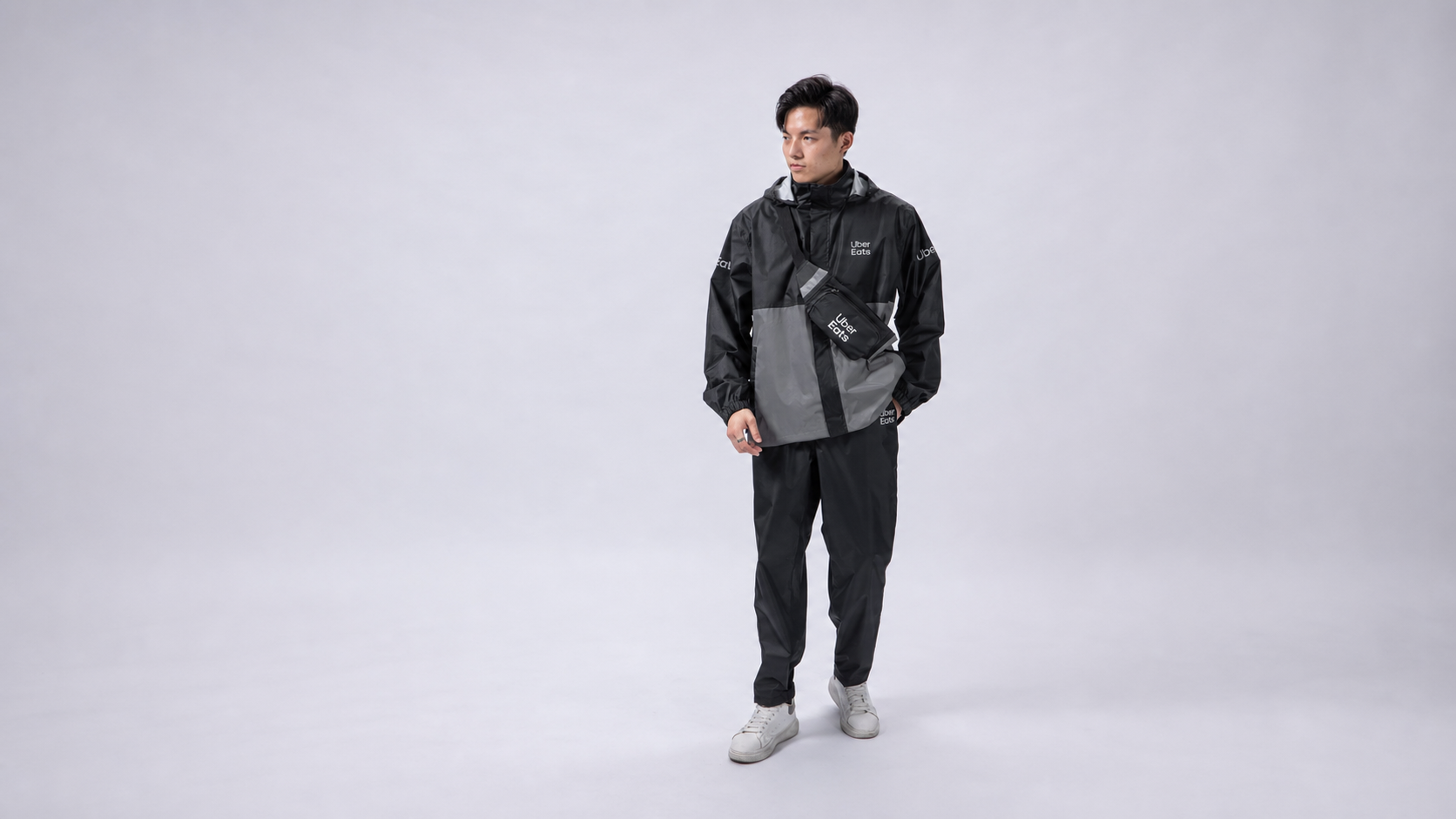
Need Jackets Designed Around Your Team?
Tell us where your team works, the weather conditions they face and how the jackets need to be branded. We can help you evaluate materials, jacket construction, sizing and customisation options. Discuss Your Jacket Requirements
Which jacket materials are waterproof?
Waterproof jackets commonly use polyester or nylon outer fabrics combined with a waterproof membrane or coating. The finished garment should also include sealed seams, protected zips and suitable cuffs. A waterproof fabric does not automatically make the complete jacket waterproof.
Are softshell jackets suitable for outdoor teams?
Softshell jackets are suitable for active outdoor teams working in wind, cool temperatures and light rain. They provide mobility and breathability but are not normally the best choice for prolonged heavy rainfall. Teams facing sustained rain should use a waterproof shell or layered clothing system.
How should branded jackets fit?
Branded jackets should provide enough room for movement and additional layers without becoming excessively loose. Employees should test samples while reaching, bending, sitting, driving or using normal work equipment. Men’s, women’s and extended size options may provide a better fit than one universal cut.
What branding methods are available for work jackets?
Common branding methods include embroidery, screen printing, heat transfer, woven patches, rubber badges, sublimation and reflective transfers. The best option depends on the jacket fabric, waterproof construction, logo design, order quantity and required durability.
Can embroidery affect a waterproof jacket?
Embroidery creates needle holes in the fabric and can affect waterproof performance. If embroidery is required on a waterproof jacket, the supplier should assess the placement and use suitable backing or sealing methods. Heat transfer may be a better option for some waterproof shells.
Should outdoor teams use one jacket throughout the year?
One jacket may not perform well in every season. A layered system containing a base layer, softshell or fleece and lightweight waterproof shell often gives employees more flexibility across different temperatures and weather conditions.