
Choosing the best vehicle for food delivery is not just about speed. It is about profit, distance, order size, parking, weather, fuel costs, and how well you can protect the food while it is in your care.
A bike might be the cheapest option, but it limits your range and capacity. A scooter can help you cover more distance, but it brings fuel, maintenance, insurance, and weather exposure into the equation. A car gives you comfort and space, but it also has the highest running costs.
The real question is not simply, “bike, scooter, or car?” The better question is:
Which vehicle gives you the best balance between orders per hour, cost per mile, and food quality?
This guide compares bikes, scooters, and cars for food delivery drivers, then explains which delivery bag setup works best for each vehicle.
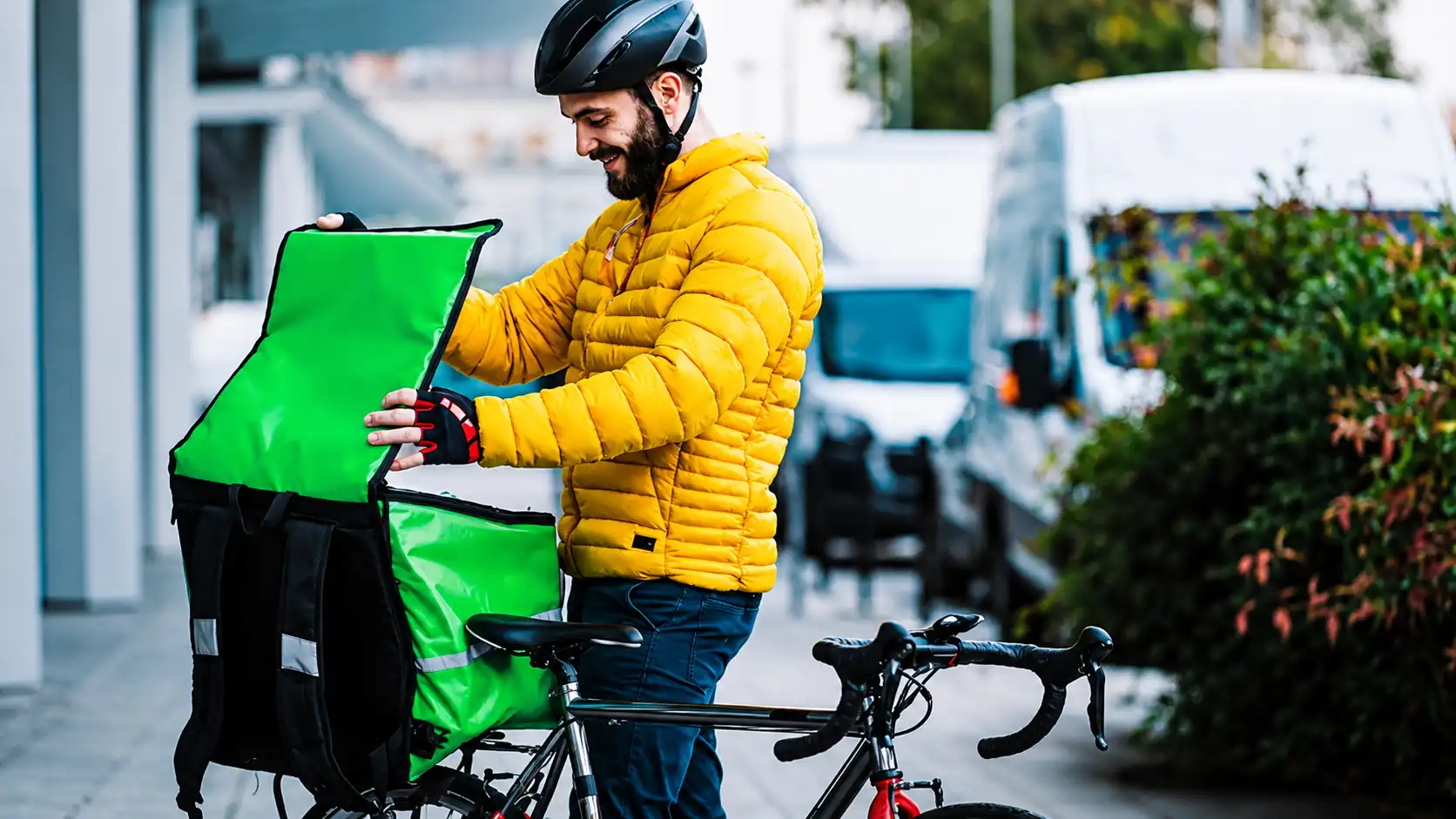
Best for dense city delivery: Bike
Best middle-ground option: Scooter
Best for large orders and suburbs: Car
Best overall: The vehicle that fits your route, order size, and costs.
Quick Answer: What Is the Best Vehicle for Food Delivery?
The best vehicle for food delivery depends on your delivery area. Bikes are best for dense cities and low operating costs. Scooters are best for medium-distance urban routes. Cars are best for suburbs, larger orders, stacked deliveries, and poor weather.
For any vehicle, an insulated delivery bag is essential for keeping food secure, warm, and customer-ready.
| Vehicle | Best For | Main Advantage | Main Weakness | Best Bag Setup |
|---|---|---|---|---|
| Bike | Dense cities, short trips | Lowest running cost | Limited range and capacity | Bike delivery bag |
| Scooter | Urban and semi-urban routes | Good speed-to-cost balance | Weather exposure and maintenance | Large insulated courier bag |
| Car | Suburbs, large orders, bad weather | Capacity and comfort | Highest operating cost | Car Combo Bags |
How to Choose the Right Delivery Driver Vehicle
A delivery vehicle is not just transport. It is your operating model.
The wrong choice can quietly destroy your earnings. A car in a dense city may lose time on parking and burn money on fuel. A bike in a spread-out suburb may leave you exhausted while limiting how many orders you can accept. A scooter may look like the perfect compromise, but it can become expensive if insurance, repairs, or poor weather reduce your working days.
Before choosing a vehicle, judge it against these six factors.
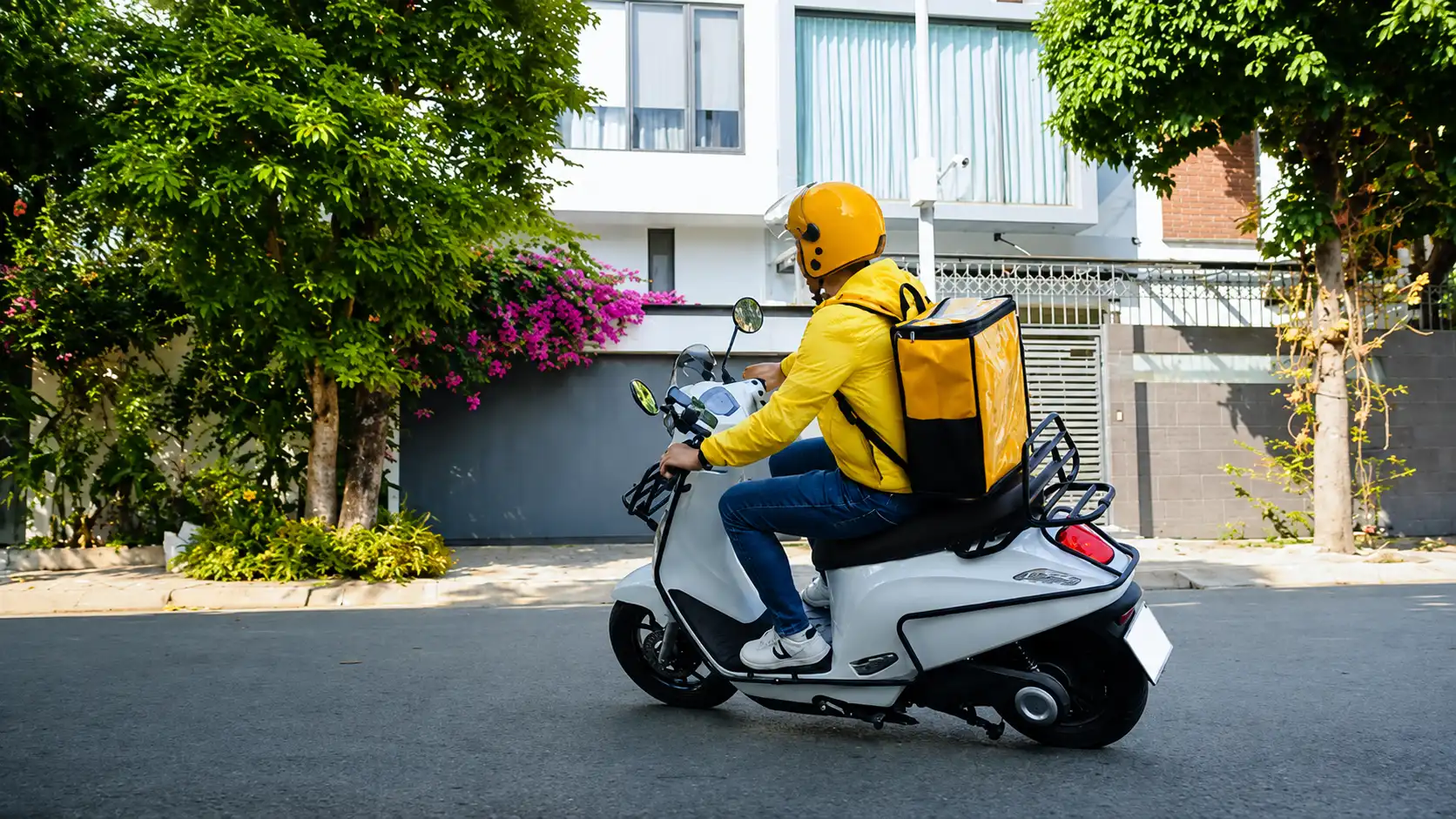
1. Delivery Distance
Short-distance city orders usually favour bikes. If restaurants and customers are close together, a bike can move quickly without fuel costs or parking delays.
Medium-distance routes often suit scooters. They give drivers more range without the full cost of a car.
Long-distance or suburban delivery usually favours cars. The distances are too far for most bike couriers to complete efficiently.
2. Order Size
A single meal or small takeaway order is easy to carry by bike. But family meals, grocery orders, stacked orders, pizza orders, and catering-style deliveries need more space.
This is where the delivery bag matters. Even the best vehicle will fail if the order is crushed, leaking, cold, or badly organised.
Drivers should choose a bag based on capacity, insulation, structure, and carrying style. SpartanPac’s guide on the qualities to look for in a delivery bag is a useful next step once you know what type of vehicle you plan to use.
3. Parking and Traffic
Cars can be painfully inefficient in dense cities. Parking delays, one-way streets, congestion, and loading restrictions can eat into your earnings.
Bikes and scooters usually win in city centres because they are easier to park and manoeuvre. This matters because delivery income often depends on completed orders per hour, not just distance travelled.
4. Weather
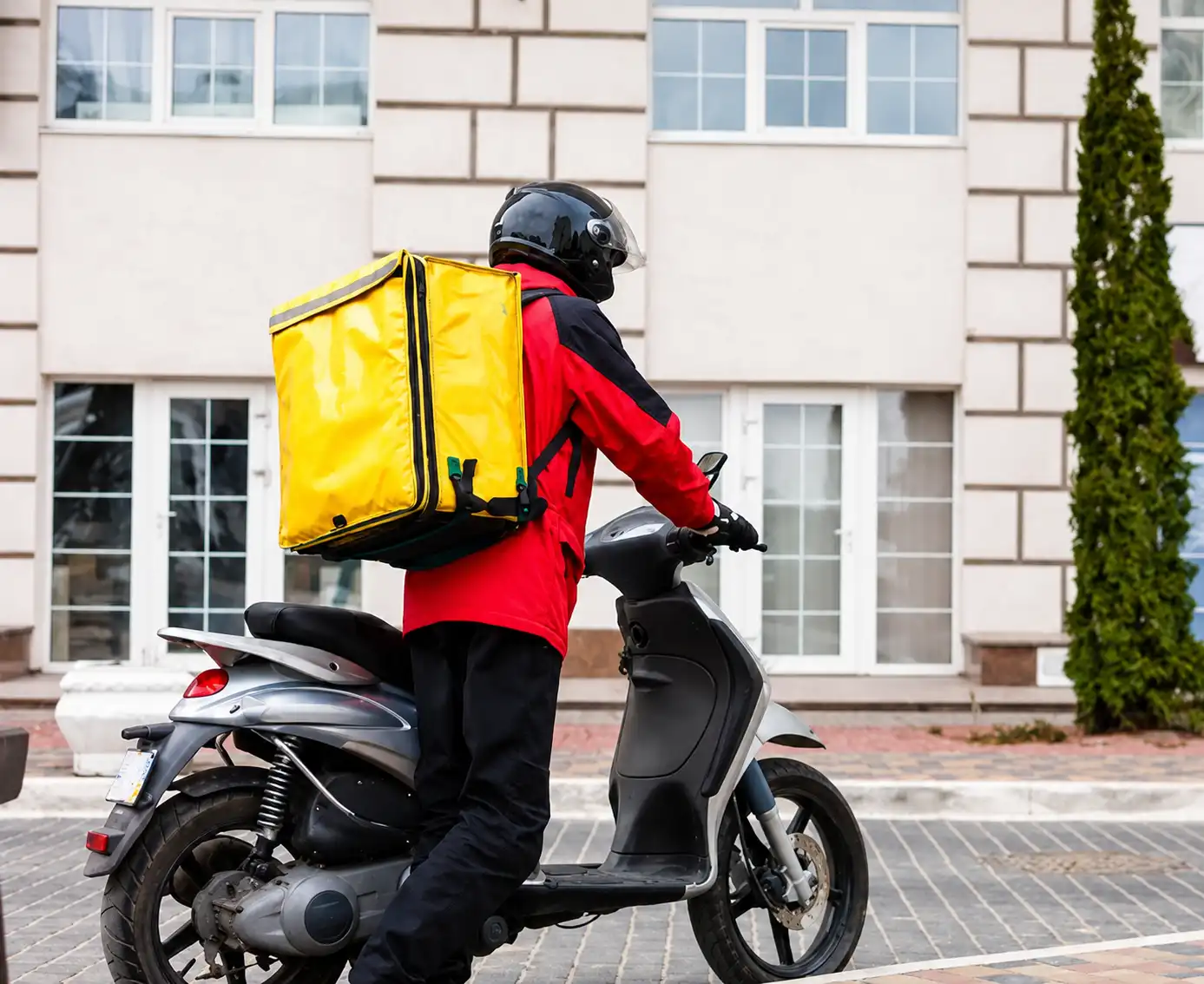
Cars offer the best protection in rain, wind, cold, and extreme heat. Bikes offer the least protection. Scooters sit somewhere in the middle, but riders are still exposed.
If you deliver by bike or scooter, weather-resistant clothing and a proper insulated delivery bag are not optional. They directly affect food condition and driver comfort.
5. Running Costs
This is where many new drivers miscalculate.
A car may earn more per order, but the real question is net profit after fuel, insurance, maintenance, depreciation, tyres, parking, and repairs.
A bike may earn less per individual delivery, but the low running cost can make it more profitable in the right area.
6. Food Quality
Drivers often over-focus on speed. That is a mistake.
Customers remember cold food, damaged packaging, spilled drinks, and messy handovers. A good delivery setup protects the order from the restaurant to the customer’s door.
Vehicle choice affects speed and distance. Bag choice affects food quality.
Bike delivery can be one of the most profitable options in dense urban areas. The reason is simple: low costs.
There is no fuel bill, parking is easier, and maintenance is usually cheaper than a scooter or car. In the right delivery zone, a bike courier can complete short trips quickly while keeping expenses low.
But bike delivery only works well under the right conditions.
Bike Delivery Is Best For
Bike delivery is best for:
- Dense city centres
- Short delivery distances
- Lunch and dinner rushes
- Areas with heavy traffic
- Drivers who want low operating costs
- Couriers who can handle physical work
Pros of Bike Delivery
The biggest advantage of bike delivery is cost control. You are not paying for fuel, expensive repairs, car insurance, or parking.
Bikes are also easier to move through congested areas. In a city centre, a bike courier may complete short-distance orders faster than a car driver who is stuck looking for parking.
Bike delivery can also be more flexible. Drivers can work in tight delivery zones and avoid many of the delays that affect cars.
Cons of Bike Delivery
The weaknesses are just as clear.
Bike delivery is physically demanding. Bad weather can make shifts uncomfortable or unsafe. Carrying capacity is limited, especially for large restaurant orders, pizzas, drinks, and stacked deliveries.
Distance is the real killer. A bike courier may be profitable when orders are close together, but profitability drops when trips get longer.
Is Bike Delivery Profitable?
Yes, bike delivery can be profitable in dense cities where orders are short, frequent, and close together.
But it is not automatically profitable. The model breaks when distances are too long, the driver cannot carry enough orders, or poor weather reduces working time.
A bike courier needs a bag that is insulated, stable, comfortable, and large enough for regular restaurant orders. If you deliver by bike, a bike delivery bag can help keep food secure while making the load easier to carry.
Bike couriers should also compare the best insulated delivery bags for bikes before choosing a setup. Stability matters too, so it is worth knowing how to secure your delivery bag to your bike before taking regular orders.
Scooters are the middle-ground option for food delivery drivers.
They offer more speed and range than a bike, but they are usually cheaper to run than a car. In many urban and semi-urban areas, a scooter can be the most balanced delivery vehicle.
But do not romanticise it. A scooter is not just “a faster bike.” It comes with extra costs, more safety risk, and possible licensing or insurance requirements depending on your location.
Scooter Delivery Is Best For
Scooter delivery is best for:
- Urban and semi-urban areas
- Medium-distance orders
- Drivers who want more range than a bike
- Areas where parking is difficult for cars
- Drivers who can manage fuel and maintenance costs
Pros of Scooter Delivery
The biggest advantage of a scooter is efficiency over medium distances.
A scooter can cover more ground than a bike without the same level of physical effort. It is usually easier to park than a car and cheaper to operate than a car.
For food delivery drivers working across mixed urban routes, scooters often provide a strong balance between speed, cost, and flexibility.
Cons of Scooter Delivery
Scooters are still exposed to bad weather. Rain, cold, wind, and poor road conditions can make delivery harder and more dangerous.
There are also real costs: fuel, tyres, repairs, insurance, protective gear, and possible licensing. These costs are lower than a car in many cases, but they are not zero.
Carrying capacity is also limited. A scooter can handle more than a bike in some setups, but it still cannot match the space of a car.
When a Scooter Makes Sense
A scooter makes sense when your delivery area is too spread out for a bike but too congested for a car.
It is often the best option for drivers who want range without giving up too much efficiency in traffic. But if your city has harsh winters, heavy rain, or frequent large orders, the scooter model becomes less attractive.
Cars are the most comfortable and spacious option for food delivery. They are also the most expensive.
A car can handle longer distances, larger orders, stacked deliveries, groceries, catering-style orders, and bad weather better than a bike or scooter. That makes it useful for suburban and lower-density delivery areas.
But higher gross earnings do not automatically mean higher profit.
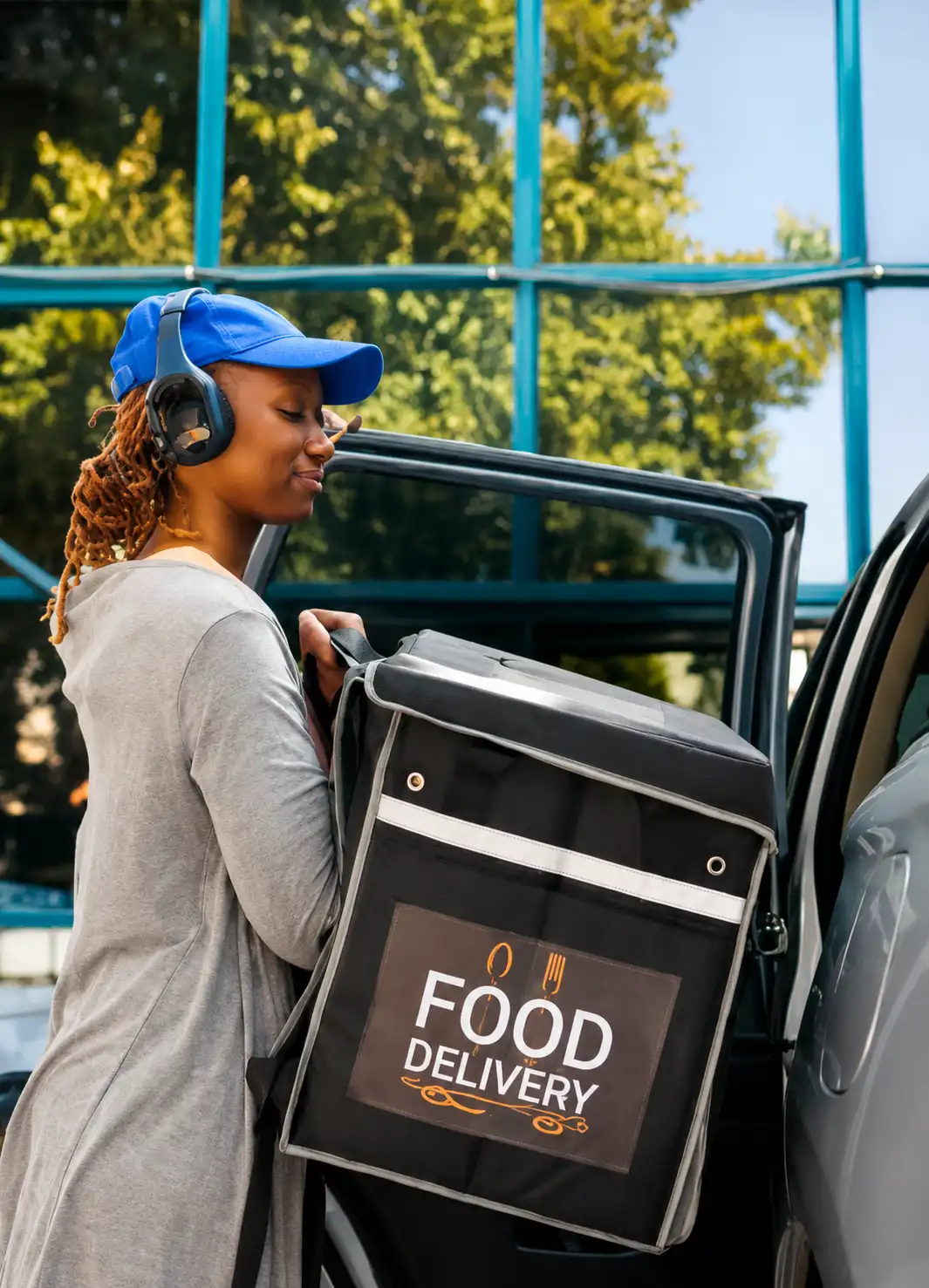
Car Delivery Is Best For
Car delivery is best for:
- Suburban routes
- Longer delivery distances
- Larger restaurant orders
- Multiple stacked orders
- Bad weather
- Drivers who prioritise comfort
- Grocery and catering-style deliveries
Pros of Car Delivery
The main advantage of a car is capacity.
You can carry more food, separate orders more easily, protect drinks, and handle larger bags. You are also protected from weather, which can make longer shifts more manageable.
Cars are especially useful in suburbs where restaurants and customers are farther apart. In those areas, bikes may be too slow and scooters may not offer enough comfort or capacity.
Cons of Car Delivery
The downside is cost.
Fuel, insurance, maintenance, depreciation, parking, tyres, and repairs all reduce profit. Car drivers need to think about net income, not just order payout.
Traffic and parking can also make cars inefficient in dense areas. A delivery that looks profitable on the app can become weak once you factor in time spent circling for parking.
Car Delivery Is Best For
Car delivery is best for:
- Suburban routes
- Longer delivery distances
- Larger restaurant orders
- Multiple stacked orders
- Bad weather
- Drivers who prioritise comfort
- Grocery and catering-style deliveries
Pros of Car Delivery
The main advantage of a car is capacity.
You can carry more food, separate orders more easily, protect drinks, and handle larger bags. You are also protected from weather, which can make longer shifts more manageable.
Cars are especially useful in suburbs where restaurants and customers are farther apart. In those areas, bikes may be too slow and scooters may not offer enough comfort or capacity.
Cons of Car Delivery
The downside is cost.
Fuel, insurance, maintenance, depreciation, parking, tyres, and repairs all reduce profit. Car drivers need to think about net income, not just order payout.
Traffic and parking can also make cars inefficient in dense areas. A delivery that looks profitable on the app can become weak once you factor in time spent circling for parking.
When a Car Makes Sense
A car makes sense when the delivery area is spread out, the order sizes are larger, or the weather is too poor for bike or scooter delivery.
For car drivers handling stacked orders or larger restaurant orders, Car Combo Bags make it easier to separate food, protect temperature, and keep deliveries organised.
Profitability Comparison: Bike vs Scooter vs Car
The most profitable delivery vehicle is usually the one that gives you the best balance between orders per hour and cost per mile.
That balance changes depending on where you deliver.
Food Quality Matters More Than Drivers Think
Vehicle choice gets the attention, but food quality gets the rating.
A fast delivery still fails if the food arrives cold, crushed, leaking, or mixed together. Customers judge the final handover, not just the route.
A good delivery bag helps with:
- Temperature retention
- Spill reduction
- Order separation
- Food presentation
- Larger order handling
- Driver professionalism
This matters for every vehicle type.
Bike couriers need stability and comfort. Scooter drivers need bags that can handle movement, turns, and weather exposure. Car drivers need organisation, especially when handling multiple orders at once.
Drivers who want to improve food condition should also learn how to keep food warm during delivery, especially during longer routes or cold weather.
The best delivery bag depends on the vehicle.
Choosing a vehicle without choosing the right bag setup is incomplete. That is like buying a van for removals and ignoring straps, blankets, and storage. The vehicle moves the order. The bag protects it.
| Factor | Bike | Scooter | Car |
|---|---|---|---|
| Upfront cost | Low | Medium | High |
| Fuel cost | None | Low | High |
| Maintenance | Low | Medium | High |
| Insurance | Usually low or none | Varies | Higher |
| Delivery range | Short | Medium | Long |
| Carrying capacity | Low to medium | Medium | High |
| Weather protection | Low | Low to medium | High |
| Parking convenience | High | High | Low to medium |
| Best market | Dense city | Urban and semi-urban | Suburbs |
The mistake is assuming one vehicle is always best. It is not. The vehicle has to match the market.
Best Bag Setup for Bike Delivery
Bike couriers need a delivery bag that is:
- Insulated
- Comfortable to carry
- Secure while riding
- Large enough for standard food orders
- Structured enough to prevent crushing
- Stable enough for turns and stops
A poor bike bag creates problems quickly. It can shift while riding, make the courier uncomfortable, damage the food, or limit the type of orders the rider can accept.
For bike couriers, a proper insulated bike delivery bag is not just a nice extra. It is part of the earning setup.
Best Bag Setup for Scooter Delivery
Car drivers need organisation.
The biggest advantage of a car is capacity, but that capacity can become messy without the right bag system. Hot and cold items should be separated. Drinks need stability. Multiple customer orders should not get mixed together.
For car delivery, insulated car bags or combo bag systems are usually stronger than using one oversized bag for everything.
Drivers comparing bag options should understand the difference between insulated vs thermal food delivery bags before choosing. SpartanPac also offers delivery bags for couriers across different use cases, from bike delivery to car-based food delivery.
Which Vehicle Should You Choose?
There is no universal answer, but there is a practical decision framework
Choose a Bike If
Choose a bike if:
- You work in a dense city
- Your orders are usually short-distance
- Parking is difficult for cars
- You want the lowest running costs
- You can handle the physical effort
- You have a proper insulated bike delivery bag
Bike delivery works when density is high and distances are short. It fails when routes become too long or order sizes become too large.
Choose a Scooter If
Choose a scooter if:
- You need more range than a bike
- You still want lower costs than a car
- Your area has traffic and parking issues
- Weather is manageable
- You can handle fuel, maintenance, insurance, and safety gear
Scooters are often the best compromise. But they only work if the added speed produces enough extra earnings to cover the added costs.
Choose a Car If
Choose a car if:
- You deliver in suburbs
- Your routes are longer
- You often carry larger orders
- You handle stacked deliveries
- Weather is a major issue
- You can manage fuel and maintenance costs
Cars are strong for capacity and comfort. But if costs are not controlled, car delivery can look profitable while quietly producing weak net income.
What Is the Best Vehicle for Food Delivery?
The best vehicle for food delivery depends on your delivery zone.
A bike is often best for dense cities because it keeps costs low and avoids parking problems. A scooter is useful for medium-distance urban routes where speed matters but a car is too expensive or inconvenient. A car is best for suburbs, larger orders, stacked deliveries, groceries, and poor weather.
But the vehicle is only half of the setup.
The right insulated delivery bag helps protect food quality, reduce delivery issues, and make every handover look more professional.
Find the Right Delivery Bag:
Shop SpartanPac delivery bags
What is the best vehicle for food delivery?
The best vehicle for food delivery depends on your delivery area. Bikes are best for dense cities and low running costs. Scooters are best for medium-distance urban routes. Cars are best for suburbs, larger orders, stacked deliveries, and poor weather.
Is bike delivery profitable?
Bike delivery can be profitable in dense cities where orders are short, frequent, and close together. Profitability drops when delivery distances increase, weather is poor, or the driver cannot carry larger orders safely.
Is a scooter better than a bike for food delivery?
A scooter can be better than a bike for medium-distance food delivery because it offers more speed and range. However, scooters also add fuel, maintenance, insurance, safety gear, and possible licensing costs.
Is a car good for food delivery?
A car is good for food delivery when drivers handle longer routes, larger orders, stacked deliveries, suburbs, or bad weather. The downside is higher fuel, insurance, maintenance, parking, and depreciation costs.
Do food delivery drivers need an insulated delivery bag?
Yes. An insulated delivery bag helps protect food temperature, reduce spills, organise orders, and present deliveries professionally, whether the driver uses a bike, scooter, or car.